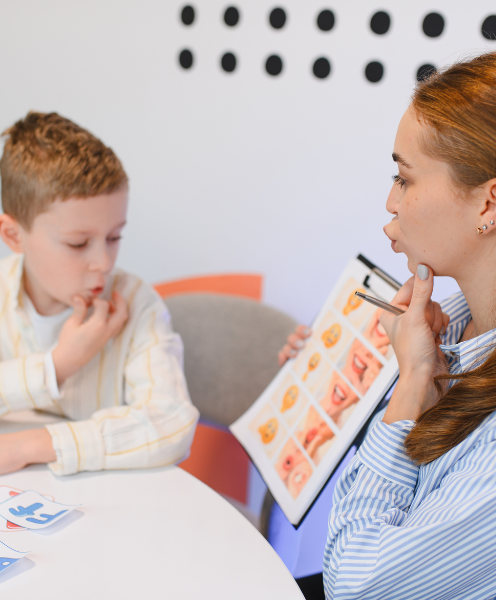
Children are born ready to learn a language. Learning a language takes time, and children vary in how quickly they master language and speech development milestones. Typically developing children may have trouble with some sounds, words, and sentences while they are learning. However, most children can use language easily around five years of age.
Speech Delays are often attributed to hearing loss, cognitive impairments, disorders, viral disease, physical impairments, or inadequate speech and language.
Parents are usually the first to notice their child is not developing language skills at the same rate as other children. They will describe their child as ‘not talking’ or ‘a late talker’ to their doctor.
About Disorder
Helping Children Learn a Language
Parents and caregivers are the most critical teachers during a child’s early years. Children learn language by listening to others speak and by practicing. Even young babies notice when others repeat and respond to the noises and sounds they make. Children’s language and brain skills get stronger if they hear many different words.
Parents can help their children learn in many different ways during playtime and daily routines, such as:
Responding to the first sounds, gurgles, and gestures a baby makes.
Repeating what the child says and adding to it.
Talking about the things that a child sees.
Asking questions and listening to the answers.
Looking at or reading books.
Telling stories.
Singing songs and sharing rhymes.
Helping Children Learn a Language
Screening and Diagnosis
If you are concerned that your child has a problem with language or speech development, talk to a healthcare provider about an evaluation. An important first step is to find out if the child may have a hearing loss.
Schools can do their own testing for language or speech disorders to see if a child needs intervention.
Contact us now to learn more about screening and diagnosis.
Screening and Diagnosis
Treatment
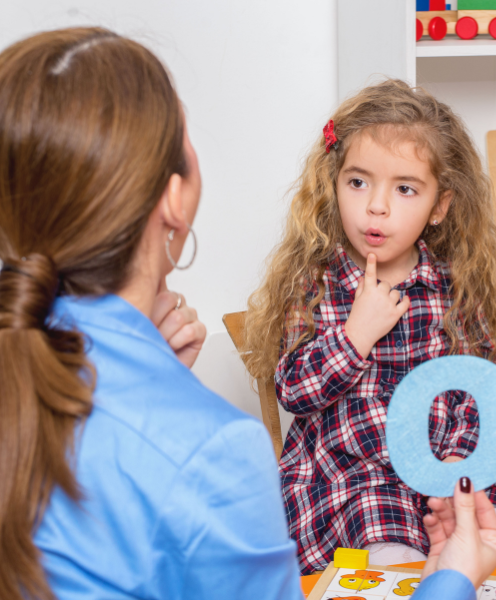
Children with language problems benefit from help and special instruction. Speech-language pathologists can work directly with children and their parents, caregivers, and teachers.
Children with specific learning disabilities, including language or speech disorders, are eligible for special education services or accommodations at school under the Individuals with Disabilities in Education Act (IDEA) and Section 504, an anti-discrimination law.