Down Syndrome
Down Syndrome
Named after physician John Langdon Down, Down Syndrome (D.S.) is a condition in which a person has an extra chromosome. Chromosomes are small “packages” of genes in the body. They determine how a baby’s body forms during pregnancy and how the baby’s body functions as it grows in the womb and after birth.
Typically, a baby is born with 46 chromosomes. Babies with Down syndrome have an extra copy of one of these chromosomes, chromosome 21. A medical term for having an extra copy of a chromosome is ‘trisomy.’ Down syndrome can be referred to as Trisomy 21. This extra copy changes how the baby’s body and brain develop, which can cause both mental and physical challenges for the baby.
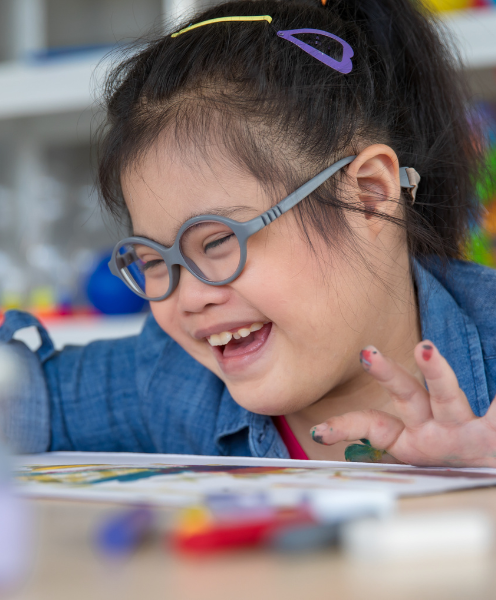
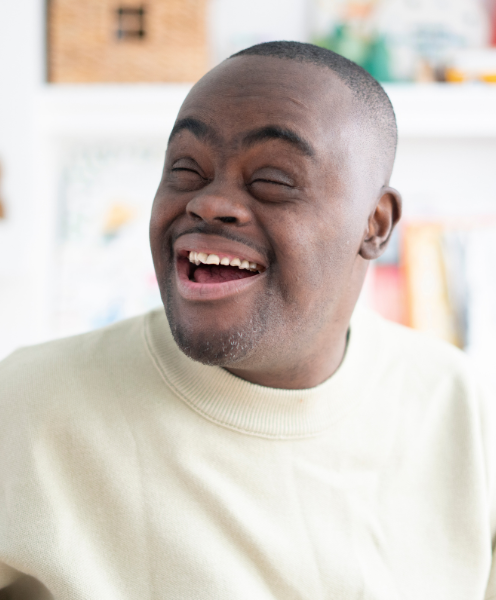
People with Down syndrome usually have an I.Q. (a measure of intelligence) in the mildly-to-moderately low range. They are slower to speak than other children. Some standard physical features of Down syndrome include:
- A flattened face, especially the bridge of the nose
- Almond-shaped eyes that slant up
- A short neck
- Small ears
- A tongue that tends to stick out of the mouth
- Tiny white spots on the iris (colored part) of the eye
- Small hands and feet
- A single line across the palm (palmar crease)
- Small pinky fingers that sometimes curve toward the thumb
- Low muscle tone or loose joints
- Shorter in height as children and adults
About Disorder
Types of Down Syndrome
How Many Babies Are Born with Down Syndrome?
Each year, about 6,000 babies born in the United States have Down syndrome. In other words, Down syndrome occurs in about 1 in every 700 babies.
Trisomy 21: About 95% of people with Down syndrome have Trisomy 21. With this type of Down syndrome, each cell has three separate copies of chromosome 21 instead of the usual two copies.
Translocation Down Syndrome: This type accounts for a small percentage of people with Down syndrome (about 3%). It occurs when an extra part or a whole extra chromosome 21 is present and attached or “trans-located” to a different chromosome rather than a separate chromosome 21.
Mosaic Down Syndrome: This type affects about 2% of the people with Down syndrome. Mosaic means mixture or combination. For children with Mosaic Down syndrome, some of their cells have three copies of chromosome 21. Still, other cells have the typical two copies of chromosome 21. Children with Mosaic Down may have fewer features of the condition due to some (or many) cells having a standard number of chromosomes.
Types of Down Syndrome

Screening and Diagnosis
There are two basic types of tests available to detect Down Syndrome during pregnancy: screening tests and diagnostic tests.
A screening test can tell a woman and her healthcare provider whether her pregnancy has a lower or higher chance of having Down Syndrome. Screening tests do not provide a definitive diagnosis, but they are safer for the mother and the developing baby.
Diagnostic tests can typically detect whether a baby will have Down Syndrome. Still, they can be riskier for the mother and the developing baby.
Neither screening nor diagnostic tests can predict the full impact of Down syndrome on a baby; no one can predict this.
Contact us now to learn more about screening and diagnosis.
Screening and Diagnosis

Treatment
Down syndrome is a lifelong condition. Early in life, services will often help babies and children with Down Syndrome improve their physical and intellectual abilities.
Most of these services focus on helping children with Down Syndrome reach their full potential. These services include speech, occupational, and physical therapy and are offered through early intervention programs in each state. Children with Down Syndrome may also need extra help or attention in school. However, many children are included in regular classes.
Contact us now to learn more about treatment.