Cerebral Palsy


Cerebral Palsy
Cerebral palsy (CP) is a group of disorders that affect a person’s ability to move and maintain balance and posture. CP is the most common motor disability in childhood. Cerebral means having to do with the brain. Palsy means weakness or problems with using the muscles. CP is caused by abnormal brain development or damage to the developing brain that affects a person’s ability to control their muscles.
There is no cure for CP, but treatment can improve the lives of those who have the condition. It is important to begin a treatment program as early as possible. After a CP diagnosis is made, a team of health professionals works with the child and family to develop a plan to help the child reach his or her full potential.
A person with severe CP might need to use special equipment to walk or might not walk at all and might need lifelong care. A person with mild CP, on the other hand, might walk a little awkwardly but might not need any exceptional help. CP does not worsen over time, though the exact symptoms can change over a person’s lifetime.
About Disorder

Types of Cerebral Palsy
Spastic Cerebral Palsy
The most common type of CP is spastic CP Spastic CP affects about 80% of people with CP People with spastic CP have increased muscle tone. Their muscles are stiff, and, as a result, their movements can be awkward.
Dyskinetic Cerebral Palsy
People with dyskinetic CP have problems controlling the movement of their hands, arms, feet, and legs, making it challenging to sit and walk. The movements are uncontrollable and can be slow and writhing or rapid and jerky. Sometimes the face and tongue are affected, and the person has difficulty sucking, swallowing, and talking.
Ataxic Cerebral Palsy
People with ataxic CP have problems with balance and coordination. They might be unsteady when they walk. They might have a hard time with quick movements or movements that need a lot of control, like writing. They might have a hard time controlling their hands or arms when they reach for something.
Mixed Cerebral Palsy
Some people have symptoms of more than one type of CP. The most common type of mixed CP is spastic-dyskinetic CP.
Types of Cerebral Palsy
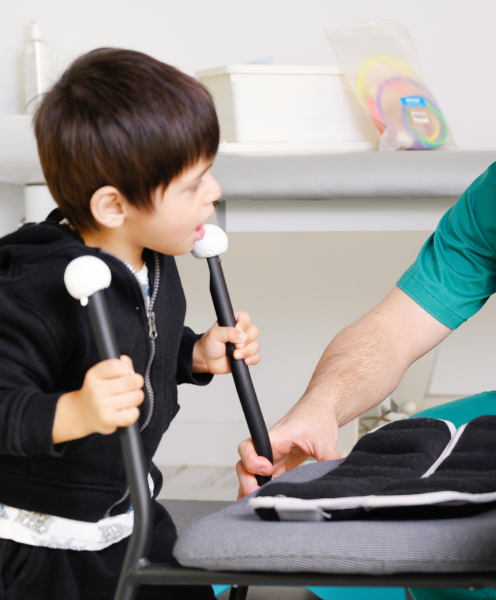
Screening and Diagnosis
The main sign that a child might have CP is a delay in reaching motor or movement milestones (such as rolling over, sitting, standing, or walking).
The Center for Disease Control and Prevention shared that diagnosing CP at an early age is important to the well-being of children and their families. Diagnosing CP can take several steps:
- Developmental Monitoring
- Developmental Screening
- Developmental and Medical Evaluations
If you think your child is not meeting movement milestones or might have CP, contact your doctor or nurse and share your concerns.
If you or your doctor is still concerned, ask for a referral to a specialist who can do a more in-depth evaluation of your child and assist in making a diagnosis.
Contact us now to learn more about screening and diagnosis.