Vision Impairment (VI) is a limitation in vision resulting from diseases, trauma, or a congenital or degenerative condition. It is generally determined by measuring the best-corrected visual acuity (BCVA) of the better-seeing eye. Most studies in the U.S. measure visual acuity at a distance of 20 feet using the standardized Snellen Eye Chart.
There is no universal definition of visual impairment. The U.S. government defines legal blindness as 20/200 or worse (to determine eligibility for vocational training, rehabilitation, schooling, disability benefits, low vision devices, and tax exemption programs). The World Health Organization as 20/400 or worse.
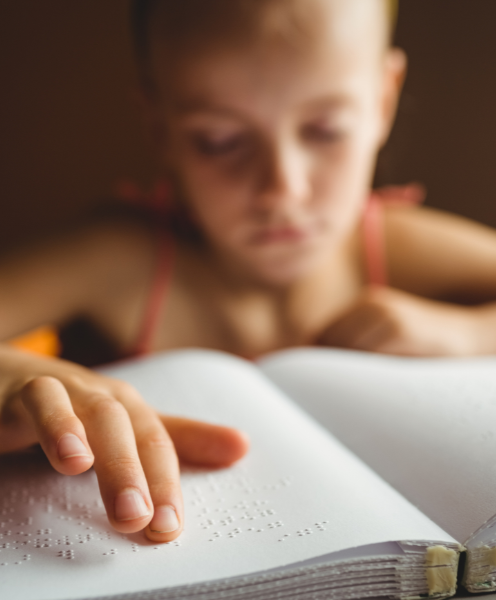
Those who are blind can rely on Braille and other non-visual forms of media (such as audiobooks). The complete lack of structure and light perception is clinically recorded as No Light Perception (NLP).
About Disorder
Screening and Diagnosis
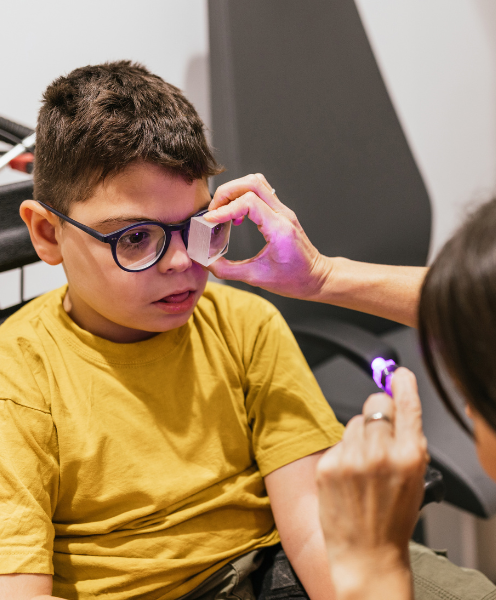
If you suspect your child has a visual problem, you could ask your physician for a brief examination or consultation if an eye doctor should conduct an eye exam.
Also, you could see an ophthalmologist, a medical doctor who specializes in examining, diagnosing, and treating eyes and eye diseases.
Schools can do their own testing for vision to see if a child needs intervention.
Contact us now to learn more about screening and diagnosis.