Suicide Education
Are you in crisis? Contact us now!
We want to help you remain safe and find hope.
Suicide Prevention
Suicide is a serious public health problem that can have lasting harmful effects on individuals, families, and communities. Many factors that contribute to suicide. The goal of suicide prevention is to reduce factors that increase risk and increase factors that promote resilience.

Suicide is a Leading Cause of Death
Suicide is death caused by injuring oneself with the intent to die. A suicide attempt is when someone harms themselves with any intent to end their life, but they do not die as a result of their actions.
According to the Center for Disease Control and Prevention, many factors can increase the risk for suicide or protect against it. Suicide is connected to other forms of injury and violence. For example, people who have experienced violence, including child abuse, bullying, or sexual violence have a higher suicide risk. Being connected to family and community support and having easy access to health care can decrease thoughts of suicide and behaviors.

Suicide is a Large and Growing
Public Health Problem
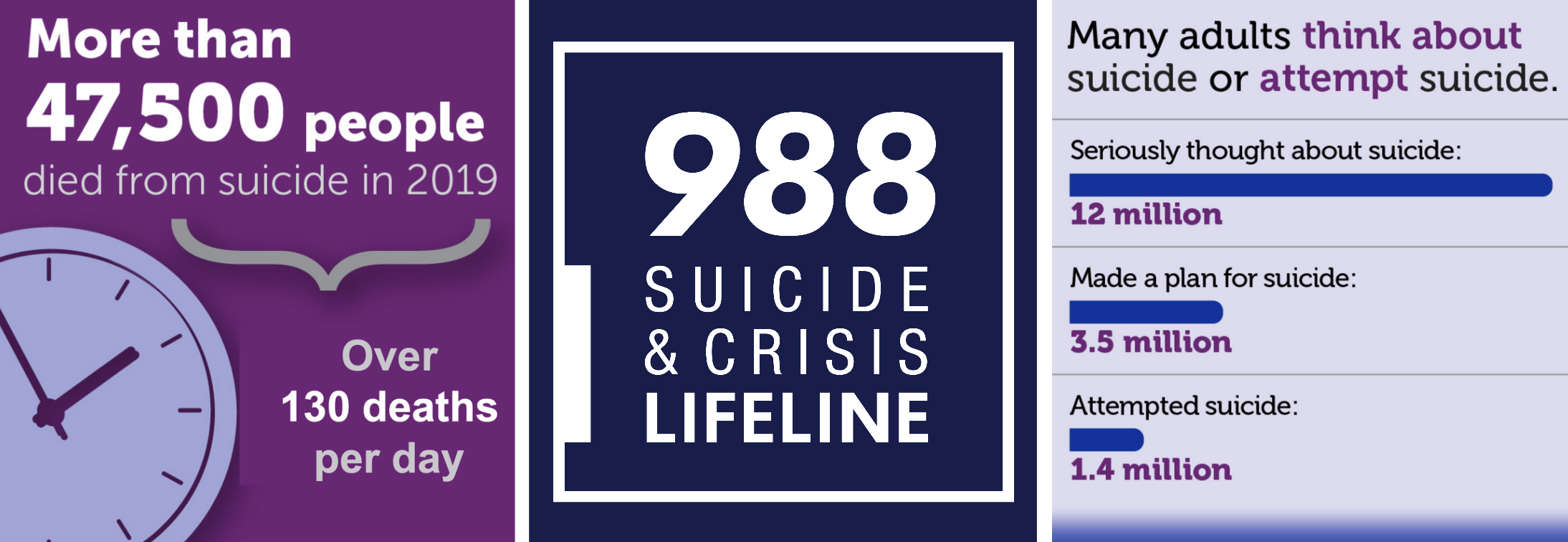
Suicide is the 10th leading cause of death in the United States. It was responsible for more than 47,500 deaths in 2019, which is about one death every 11 minutes. The number of people who think about or attempt suicide is even higher. In 2019, 12 million American adults seriously thought about suicide, 3.5 million planned a suicide attempt, and 1.4 million attempted suicide.
Suicide affects all ages. It is the second leading cause of death for people ages 10-34, the fourth leading cause among people ages 34-54, and the fifth leading cause among people ages 45-54.
Some groups have higher suicide rates than others. Suicide rates vary by race, ethnicity, age, and other factors. The highest rates are among American Indian/Alaska Native and non-Latinx White populations.
Other Americans with higher than average rates of suicide are:
- Veterans
- People who live in rural areas
- Workers in certain industries and occupations like mining and construction
- Young people who are lesbian, gay, or bisexual have a higher rate of suicidal ideation and behavior compared to their peers who identify as straight
When people die by suicide, their surviving family and friends may experience shock, anger, guilt, symptoms of depression or anxiety, and may even share thoughts of suicide themselves.