
How to Help a Loved One
How to Help a Loved One
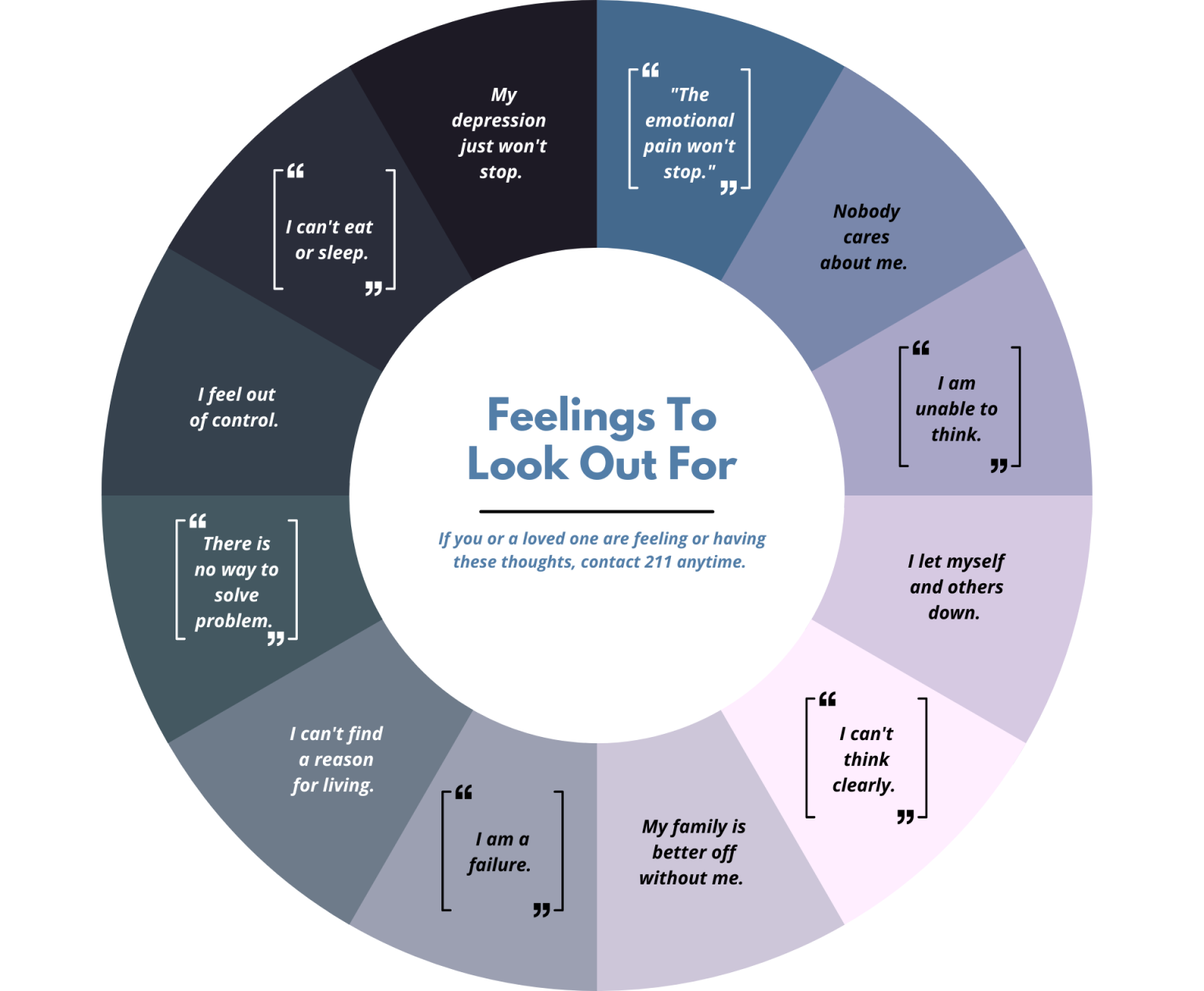
Are you concerned about a friend or a loved one thinking about suicide?
Are you unsure how to support someone thinking about suicide?
It can be scary when a friend or loved one is thinking about suicide. Let us support you. 211 is available for everyone, is free, confidential, and available to you 24/7.
Save a Life: Learn how to ask if
someone is thinking about suicide.
The C-SSRS, also known as the Columbia Protocol, is a short questionnaire that can be administered quickly with no formal mental health training, and it is relevant in a wide range of settings and for individuals of all ages.

Ask and Listen
Speaking to someone directly about suicide is one of the most effective ways to open the door for dialogue about their emotional difficulties and identify the next steps one needs to take. Talking about suicide may lessen rather than increase suicidal ideation.
Do not be sworn to secrecy. Tell them your focus is to keep them safe and provide them support.
Consider their responses seriously and do not disregard them, especially if they indicate with their actions that they may consider ending their lives. Listen carefully to their reasons for suffering and why they might want to continue living.
Ask and Listen

Assure You
Are Present
It’s helpful to even “just be” with someone at risk for suicide. Reducing someone’s loneliness by showing full support, either physically or emotionally (both in the short and long-term), can decrease suicide risk.
Be sure you follow through and don’t commit to anything you are unable to do. If you cannot be physically present with someone who is thinking about suicide, help them identify others who may help. You should only involve those who are willing, able, and appropriate to be there.
Assure You Are Present

Keep Them Safe
Following “Ask” step, it’s crucial to establish immediate safety:
- Have they already done anything to try to kill themselves before talking with you?
- Are the thoughts of suicide accompanied by any specific actions?
- Does the individual attempting suicide have a plan to kill themselves?
- Do they have access to what they need to carry out their plan?
- Does the person have a specific timeframe of when they’re thinking about ending their life?
Depending on their answers, we can tell a lot about the person’s safety. For example, the more steps and pieces of a plan they have in place, the more likely they will carry out their plan.
211 can always act as a resource during these moments if you aren’t entirely sure what to do next.
Keep Them Safe

Help Them to Connect
It may help them develop a safety plan that outlines what to do in emergencies, especially if they are experiencing thoughts of suicide. This may include a list of individuals to call during these critical times.
The combination of ongoing supports and connections with resources in the community can help someone with suicidal thoughts by creating a safety net for when they are experiencing a crisis.
We can explore if:
- They are receiving professional mental health services
- If they are not, is this currently an option for them?
- Are there additional community services that may be able to help?
You can dial 211 seven days a week, 24/7, to look for community resources.
Help Them to Connect

Show You Care: Follow Up
The follow-up step is a great way to assess if there’s more you can do for someone who’s experiencing thoughts of suicide. You can send them a letter, text, email, or give them a call.
Sending a caring postcard, even on a small scale, can reduce their risk of suicide. Evidence suggests that even a simple contact can help increase the feeling of connectedness, showing you care. Also, several studies found that follow-ups could reduce suicide risk.
Show You Care: Follow Up
How to Support Someone Who
Is Talking About Suicide.
DO:
Be aware. Learn the warning signs, risk factors, and protective factors.
Ask them if they are thinking about killing themselves. (This will not put the idea into their heads, or make it more likely that they will attempt suicide).
Be caring, non-judgmental, and supportive.
Offer empathy, not sympathy.
Take the threat seriously.
Get involved! Be available and show interest and support
Allow the person in crisis to talk about their reasons for wanting to die.
Allow the person in crisis to talk about their feelings.
Be willing to listen as long as needed.
Focus on keeping the person safe.
Explore healthy coping skills and support systems.
Call 211 or Lifeline at 800-273-TALK (8255).
Take action. Try to reduce or remove means, like weapons or pills.
If needed, take the person to an emergency room.
If life-threatening emergency call 911.
DON’T:
- Don’t debate whether suicide is right or wrong, or feelings are good or bad.
Don’t lecture on the value of life.
Don’t use guilt as a method to prevent suicide.
Don’t ask “why.”
Don’t give advice.
Don’t tell them that everything will be O.K.
Don’t minimize (make light of) their situation.
Don’t try to tell someone how they should feel.
Don’t dare them to do it.
Don’t be sworn to secrecy. Seek support for yourself and them.
Don’t leave the person alone.